Pelestarian dan Pemanfaatan Tanaman Obat Keluarga Berbasis Kearifan Lokal di Kecamatan Sabak Auh
DOI:
https://doi.org/10.36526/tekiba.v6i3.9656Keywords:
Family Medicinal Plants, Local Wisdom, Community Service, Utilization, PreservationAbstract
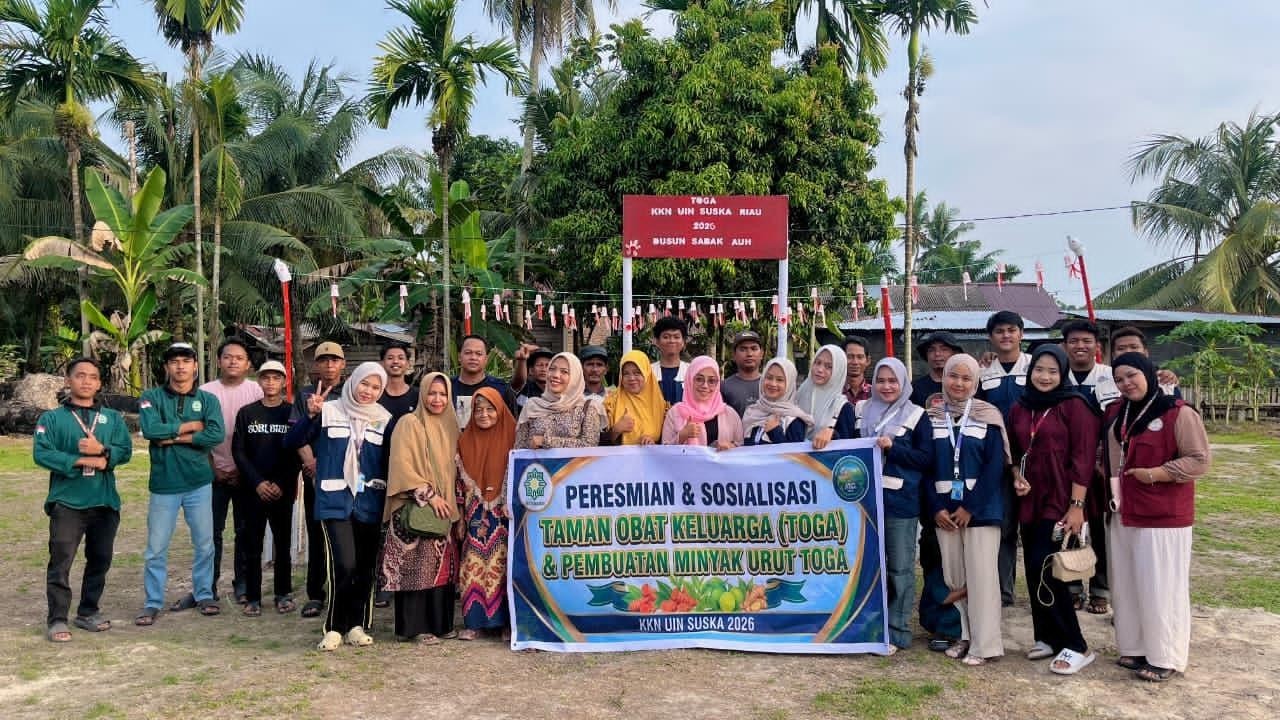
Family Medicinal Plant (TOGA) initiatives represent a form of biological resource utilization that integrates local knowledge, daily practices, and community-based environmental management. This community service activity in Sabak Auh District was driven by the need to link the potential of herbal plants with cultivation areas, facilities for plant identification and care, and processing practices relevant to local residents. The ini-tiative aimed to strengthen the conservation and utilization of TOGA while analyzing its social significance within programs in the villages of Sabak Permai, Bandar Sungai, and Bandar Pedada. Implementation in-volved observation, program discussions, coordination, collaborative work, and processing activities conduct-ed between July and August 2026. Activity data were analyzed using a descriptive qualitative approach based on observation notes and implementation documentation. The activities added one TOGA site each in Sabak Permai and Bandar Pedada. The number of sites increased from two to three in Sabak Permai (50%) and from eight to nine in Bandar Pedada (12.5%), while activities in Bandar Sungai focused on conserving the existing TOGA area. In Sabak Permai, TOGA utilization was expanded through the production of herbal mas-sage oil using turmeric, ginger, aromatic ginger (kencur), lemongrass, and coconut oil; in Bandar Sungai, con-servation activities included the provision of chili seedlings, plant identification signs, and watering equip-ment, accompanied by shared maintenance; and in Bandar Pedada, the new TOGA site was planted with ten types of plants. The activities contributed additional cultivation sites, support for the conservation and maintenance of existing TOGA facilities, and a practical example of herbal processing, providing resources for residents to recognize, care for, and utilize locally known plants.
References
[1] H. M. Z. N. Amrul, “Peran kearifan lokal dalam pelestarian tumbuhan obat dan lingkungan di Sumatera Utara,” Jurnal Ilmiah Biologi UMA (JIBIOMA), vol. 6, no. 2, pp. 225–235, 2024, doi: https://doi.org/10.31289/jibioma.v6i2.5115
[2] Igustita et al., “Ethnobotany of medicinal plants in homegarden of Menoreh Karst Area, Purworejo District, Indonesia,” Asian Journal of Ethnobiology, vol. 6, no. 2, pp. 174–184, 2023, doi: https://doi.org/10.13057/asianjethnobiol/y060208
[3] Adnan et al., “Diversity of herbs and spices plants and their importance in traditional medicine in the South Aceh District, Indonesia,” Biodiversitas Journal of Biological Diversity, vol. 23, no. 7, pp. 3836–3843, 2022, doi: https://doi.org/10.13057/biodiv/d230761
[4] S. A. Darmastuti, I. A. Nazar, and A. D. Setyawan, “Plant diversity and its use in Javanese urban home garden: An ethnobotanical study in Central Java, Indonesia,” Asian Journal of Ethnobiology, vol. 7, no. 1, pp. 32–42, 2024, doi: https://doi.org/10.13057/asianjethnobiol/y070104
[5] N. Mardiana and W. A. Subaidah, “Sosialisasi penanaman dan pemanfaatan tanaman obat keluarga (TOGA),” INDRA: Jurnal Pengabdian kepada Masyarakat, vol. 3, no. 2, pp. 31–34, 2022, doi: https://doi.org/10.29303/indra.v3i2.161
[6] S. Mas’ula, E. Ahdhianto, M. A. Thohir, and N. Iruntyasari, “Pelatihan cara penanaman TOGA untuk meningkatkan kemampuan dan keterampilan warga Desa Ngenep,” Jurnal ABDINUS: Jurnal Pengabdian Nusantara, vol. 7, no. 1, pp. 260–270, 2023, doi: https://doi.org/10.29407/ja.v7i1.17699
[7] M. P. Nayla et al., “Sosialisasi dan pelatihan pembibitan serta pembudidayaan TOGA (Tanaman Obat Keluarga) di Desa Rambipuji, Kabupaten Jember,” Jurnal Pengabdian Nasional (JPN) Indonesia, vol. 5, no. 3, pp. 842–851, 2024, doi: https://doi.org/10.35870/jpni.v5i3.1075
[8] R. Susanti et al., “Pengembangan taman TOGA untuk peningkatan kesehatan warga Panti Asuhan Yaf-ikhi Semarang,” Abdimasku: Jurnal Pengabdian Masyarakat, vol. 6, no. 1, pp. 202–209, 2023, doi: https://doi.org/10.33633/ja.v6i1.1066.
[9] C. Rofiah, “Analisis data kualitatif: Manual atau dengan aplikasi?” Develop, vol. 6, no. 1, pp. 33–46, 2022, doi: https://doi.org/10.25139/dev.v6i2.4389
[10] Qomaruddin and H. Sa’diyah, “Kajian teoritis tentang teknik analisis data dalam penelitian kualitatif: Perspektif Spradley, Miles dan Huberman,” Journal of Management, Accounting, and Administration, vol. 1, no. 2, pp. 77–84, 2024, doi: https://doi.org/10.52620/jomaa.v1i2.93
[11] F. D. Nurcahyo et al., “Ethnobotanical study of medicinal plants used by local communities in the Up-per Bengawan Solo River, Central Java, Indonesia,” International Journal of Bonorowo Wetlands, vol. 14, no. 1, pp. 25–36, 2024, doi: https://doi.org/10.13057/bonorowo/w140104
[12] G. I. Prayoga et al., “Pengembangan kawasan konservasi tanaman obat berbasis kearifan lokal masyarakat adat Mapur,” Jurnal Pengabdian Kepada Masyarakat Universitas Bangka Belitung, vol. 9, no. 2, pp. 25–33, 2022, doi: https://doi.org/10.33019/jpu.v9i2.3599
[13] M. K. Al Yazid et al., “Pembangunan Rumah TOGA dan Kebun TOGA sebagai Kawasan Konservasi TO-GA di Desa Rambipuji,” Jurnal Pengabdian Nasional (JPN) Indonesia, vol. 5, no. 3, pp. 852–860, 2024, doi: https://doi.org/10.35870/jpni.v5i3.1076
[14] E. N. Aisyah, “Pemberdayaan ekonomi perempuan melalui pengolahan Tanaman Obat Keluarga (TOGA) menjadi produk minuman,” Aksiologiya: Jurnal Pengabdian Kepada Masyarakat, vol. 6, no. 1, pp. 1–7, 2022, doi: https://doi.org/10.30651/aks.v6i1.4924
[15] K. L. Mukhlasin, “Pengelolaan tanaman ‘Kapulaga’ menjadi obat-obatan herbal berupa minyak urut sebagai upaya peningkatan kreativitas dan kemandirian perekonomian masyarakat Desa Ranuwurung Kecamatan Gading Kabupaten Probolinggo,” KHIDMAH: Jurnal Pengabdian Masyarakat, vol. 3, no. 1, pp. 45–50, 2023, doi: https://doi.org/10.55210/khidmah.v3i1.166
[16] A. Sadino et al., “Penyuluhan pemanfaatan tanaman obat tradisional berdasarkan kearifan lokal di Desa Wangunjaya Kabupaten Garut,” JPPM (Jurnal Pengabdian dan Pemberdayaan Masyarakat), vol. 8, no. 1, pp. 45–52, 2024, doi: https://doi.org/10.30595/jppm.v8i1.19901
[17] M. P. Marpaung and D. Prasetyo, “Penyuluhan pemanfaatan tanaman obat tradisional di Desa Telang Sari, Provinsi Sumatera Selatan,” JPPM (Jurnal Pengabdian dan Pemberdayaan Masyarakat), vol. 6, no. 1, pp. 85–91, 2022, doi: https://doi.org/10.30595/jppm.v6i1.7031
[18] C. A. Pasaribu et al., “Inventarisasi dan Pemetaan Keberagaman Tanaman Obat Keluarga di Desa Rambipuji, Kabupaten Jember: Upaya Pelestarian Pengetahuan Lokal,” Jurnal Pengabdian Nasional (JPN) Indonesia, vol. 5, no. 3, pp. 870–879, 2024, doi: https://doi.org/10.35870/jpni.v5i3.1078
[19] L. Agustina, Santhyami, P. Agustina, E. P. A. N. Tyas, M. G. Wicaksono, and M. R. Andika, “Utilization of family medicinal plants for health in Ngasem Village,” Community Empowerment, vol. 8, no. 6, pp. 787–792, 2023, doi: https://doi.org/10.31603/ce.8219
[20] E. Susanti, W. I. P. E. Sari, and Kurniyati, “Pembentukan dan pemberdayaan kader kampung tradi-sional komplementer dalam pemanfaatan TOGA di Desa Kampung Delima tahun 2023,” GEMAKES: Jurnal Pengabdian Kepada Masyarakat, vol. 4, no. 1, pp. 90–97, 2024, doi: https://doi.org/10.36082/gemakes.v4i1.1497
Downloads
Published
Issue
Section
License
Copyright (c) 2026 Dendi Setiawan, Idria Maita, Nurhuda Asshodiq

This work is licensed under a Creative Commons Attribution-ShareAlike 4.0 International License.