Edukasi Gaya Hidup Sehat Untuk Meningkatkan Literasi Kesehatan Siswa SMK
DOI:
https://doi.org/10.36526/tekiba.v6i1.6727Keywords:
Health Literacy, Healthy Lifestyle, Vocational Students, School-Based Education, Health PromotionAbstract
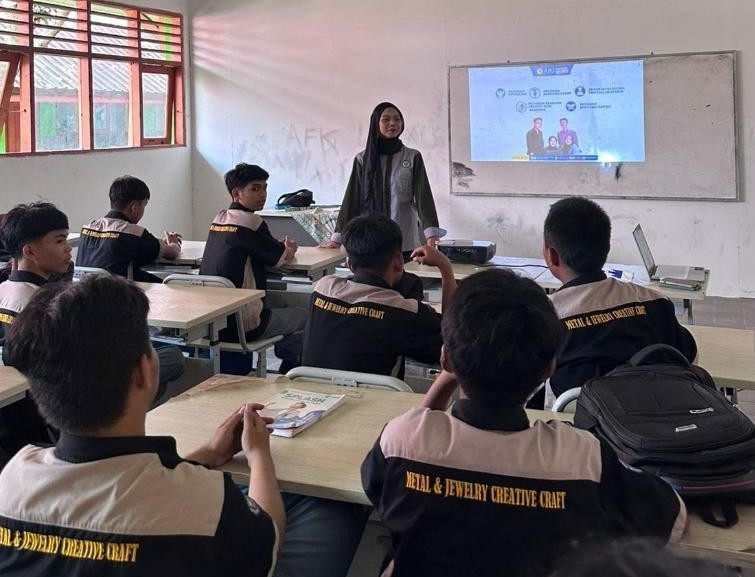
This study aims to describe the level of healthy lifestyle practices and health literacy among students at SMK Negeri 2 Tenggarong as a basis for strengthening adolescent health promotion programs. A descriptive quantitative design was employed using a questionnaire consisting of four key indicators: healthy eating habits, physical activity, rest and mental health, as well as hygiene and healthy behavior. A total of 192 students participated as respondents and completed a four-point Likert scale questionnaire. The results indicate that most students demonstrated moderate to high levels of healthy lifestyle practices. In terms of eating habits, the majority reported regular breakfast consumption, adequate intake of fruits and vegetables, and limited consumption of sugary drinks. Students also showed good physical activity levels, with many actively engaging in sports and daily movement. The rest and mental health indicator revealed that most students had sufficient sleep duration and stable emotional conditions, although late-night gadget use remained an issue for some. Hygiene practices were generally high, reflecting strong awareness of personal and environmental cleanliness. Overall, the findings suggest that students' health literacy is relatively good, yet continuous reinforcement through school-based socialization and educational interventions is needed to ensure consistent and sustainable healthy behaviors.
References
[1] S. P. Khanal, C. B. Budhathoki, and O. Okan, “Improving adolescent health literacy through school- based health literacy intervention: a mixed-method study protocol,” BMC Public Health, vol. 23, no. 1, Dec. 2023, doi: https://doi.org/10.1186/s12889-023-15316-4
[2] F. D. Wijayanto and H. A. Hermawan, “Evaluation of the School Health Services (UKS) Role through the Pattern of Cooperation with the Community Health Centers in Creating a Healthy and Clean School Environment,” Jurnal Kependidikan Penelitian Inovasi Pembelajaran, vol. 7, no. 1, May 2023, doi: https://doi.org/10.21831/jk.v7i1.55904
[3] S. Nurul Hapizah Damanik and S. Drivoka Sulistyaningrum, “Integrating Digital Literacy Infused English Reading Materials for Senior High School: A Need Analysis,” Journal of English Educational Study (JEES), vol. 7, pp. 215–224, 2024. doi: https://doi.org/10.31932/jees.v7i2.3491
[4] S. Sukys, G. Kuzmarskiene, and K. Motiejunaite, “Exploring the Association Between Adolescents’ Health Literacy and Health Behavior by Using the Short Health Literacy (HLS19-Q12) Questionnaire,” Healthcare, vol. 12, no. 24, p. 2585, Dec. 2024, doi: https://doi.org/10.3390/healthcare12242585
[5] P. Dunn and E. Hazzard, “Technology approaches to digital health literacy,” Int J Cardiol, vol. 293, pp. 294–296, Oct. 2019, doi: https://doi.org/10.1016/j.ijcard.2019.06.039
[6] S. Mancone, S. Corrado, B. Tosti, G. Spica, and P. Diotaiuti, “Integrating digital and interactive approaches in adolescent health literacy: a comprehensive review,” 2024, Frontiers Media SA. doi: https://doi.org/10.3389/fpubh.2024.1387874
[7] Kajian sektor kesehatan. Direktorat Kesehatan dan Gizi Masyarakat, Kedeputian Pembangunan Manusia, Masyarakat, dan Kebudayaan, Kementerian Perencanaan Pembangunan Nasional/Badan Perencanaan Pembangunan Nasional, 2019. https://www.bappenas.go.id/unit-kerja/0100
[8] “Landscape Analysis of Overweight and Obesity in Indonesia,” Jakarta, 12920, Indonesia., Dec. 2022. Accessed: Dec. 02, 2025. [Online]. Available: www.unicef.or.id
[9] A. Sava, “Hubungan Tingkat Literasi Tentang Gizi Dengan Status Gizi Pada Siswi Di SMKN 4 Tanah Grogot Kalimantan Timur the Correlation Between Level of Nutrition Literacy with Nutrition Status of Students at SMKN 4 Tanah Grogot East Borneo.” Jurnal Media Gizi Kesmas 11(2):445-450. doi: https://doi.org/10.20473/mgk.v11i2.2022.445-450
[10] Wihdaturrahmah and M. Chuemchit, “Determinants of Menstrual Hygiene Among Adolescent School Girls in Indonesia,” Int J Womens Health, vol. Volume 15, pp. 943–954, Jun. 2023, doi: https://doi.org/10.2147/IJWH.S400224
[11] H. Literasi Kesehatan dengan Perilaku Kesehatan Siswa Sekolah Menengah Atas Negeri di Kota Surabaya, P. Jasmani, K. dan Rekreasi, and F. Ilmu Olahraga, “Hubungan Literasi Kesehatan Dengan Perilaku Kesehatan Siswa Sekolah Menengah Atas Negeri Di Kota Surabaya Yurida Nor Aula*, Faridha Nurhayati.” [Online]. Available:https://ejournal.unesa.ac.id/index.php/jurnal-pendidikan-jasmani/issue/archive
[12] M. Widyawati, “Terapkan Pendidikan Kesehatan di Sekolah.” Accessed: Dec. 02, 2025. [Online]. Available: https://kemkes.go.id/id/terapkan-pendidikan-kesehatan-sekolah
[13] A. Yani, I. Afrianto, M. Syukran, W. O. N. Noviyanti Rachman, and Z. Muhamad, “Adolescent Behavior in Implementing Clean and Healthy Living Practices through Local Wisdom-Based Character Education: A Cross-Sectional Study,” Journal of Public Health and Pharmacy, vol. 5, no. 1, pp. 54–63, Feb. 2025, doi: https://doi.org/10.56338/jphp.v5i1.6141
[14] A. E. S. Wicaksono, “Free health checks to protect student health, minister says.” Accessed: Dec. 02, 2025. [Online].Available: https://en.antaranews.com/news/371165/free-ealth-checks-to-protect-student-health-minister-says?utm_source=chatgpt.com
[15] M. Romadhon, R. Wulandari, Y. Rimbawati, R. Amalia, and R. G. Sari, Buku Ajar: Promosi Kesehatan. Adab, 2024. Accessed: Dec. 02, 2025. [Online]. Available: https://books.google.co.id/books
[16] Budge, Sophie, et al. Environmental sanitation and the evolution of water, sanitation and hygiene. Bulletin of the World Health Organization, 2022, 100.4: 286.. doi:https://doi.org/10.2471/BLT.21.287137 10.1177/1063293X20988395
[17] Valcourt, Nicholas, et al. System approaches to water, sanitation, and hygiene: a systematic literature review. International Journal of Environmental Research and Public Health, 2020, 17.3: 702.. doi: https://doi.org/10.3390/ijerph17030702
[18] SHIN, Dong Wook, et al. National General Health Screening Program in Korea: history, current status, and future direction. Precision and Future Medicine, 2022, 6.1: 9-31. doi: https://doi.org/10.23838/pfm.2021.00135
[19] Arvianti, Leha Arya; AFIFI, Erwinestri Hanidar Nur; KELIATA, Karmin. Inisiatif guru sekolah dasar menyediakan media dan bahan pratikum sains di tengah keterbatasan fasilitas laboratorium. Search: Science Education Research Journal, 2024, 2.2: 102-114. doi: https://doi.org/10.47945/search.v2i2.1469
[20] Sari, Cindy Novita, et al. Keterbatasan fasilitas tempat pembuangan sampah dan tantangan kesadaran masyarakat dalam pengelolaan sampah (Studi kasus di Desa Jandi Meriah Kec. Tiganderket Kab. Karo). Journal Of Human And Education (JAHE), 2023, 3.2: 268-276. doi: https://doi.org/10.31004/jh.v3i2.225
Downloads
Published
Issue
Section
License
Copyright (c) 2026 Devi Andreawati, Agustiyani Wijayanti, Nak Mas Ashim Hanif, Atikawati Fadhillah, Muhammad Rio Satriananta, Nur Aminullah, Yeni Rahmawati, Januar Abdillah Santoso

This work is licensed under a Creative Commons Attribution-ShareAlike 4.0 International License.